What game will finally fulfill the dreams of open world games?
Sorry for late-in-the-day article again, I spent hours getting distracted making clippable moments on Samet The Turk's Chess Arena stream today (as that game's "Season 1" patch came out today), and did not know what to make an article about. I could either put out "Puzzle Adjacent Genres: 3D Platformers" and make the case that learning all the techniques in one is a puzzle game or some article about battle royales and the appeal of them, the relation to Battlefield-like moments, and did not know which to write about.
Well, thanks to the philosophy of COMBINE EVERYTHING I've found a way to tie these together in some way, touching on:
- Future plans for my barely-puzzle-platformer Poke BALL Toads
- What makes open world games special, the dream of it and why games don't fulfill it
Everyone's familiar with that Zelda Breath of the Wild opening shot right?
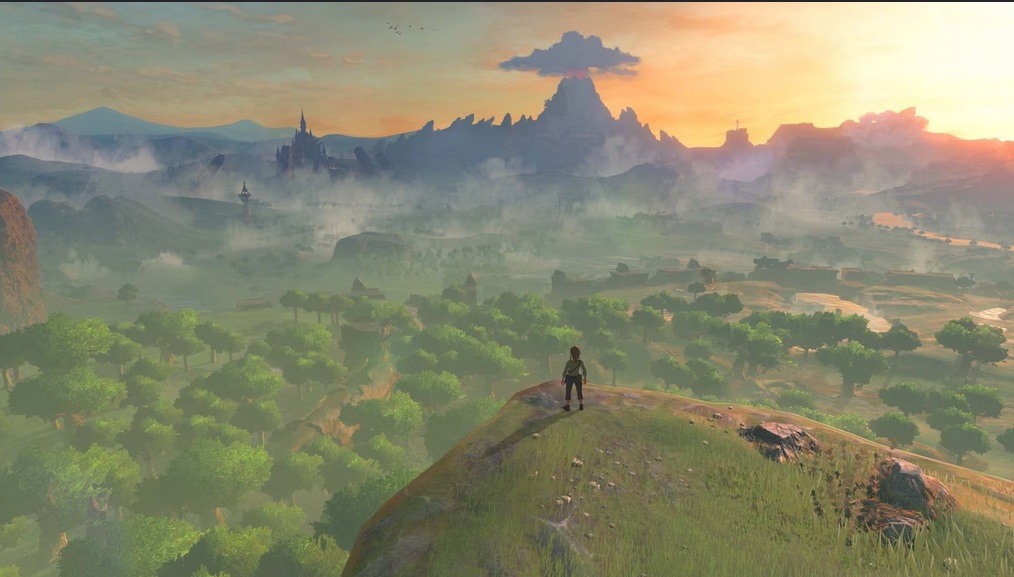
This, in my opinion, is the visual and dream of an open world that games are constantly striving for, and ultimately they don't succeed.
Well hold on - they do succeed, but it's temporary. You feel extreme novelty at the world at first, then get used to buildings all 'being the same' or copypasted, or some areas are just flat grass, the minimap gets filled out and then looking at this view on a 2nd playthrough is not as impactful. The way that a game's mystery is lost when you 100% it, that is just as true for open world games.
Even the novelty of the 'open world' itself, as I played Genshin Impact (greatly BOTW inspired anime gacha game, not a puzzle game, I am not in the phase of my life where I could get addicted or money-addicted to it but some are vulnerable to that...) before Breath of the Wild, and having played Genshin first probably reduced the novelty I felt a lot.
What's more is that open world games have always had a tension and identity crisis of the 'aesthetic' of "freedom" fighting against the practicalities of making linear content. So freedom can be limited to "doing linear stuff but just in a different order".
Open World games in the context of my site and audience
Obviously I am way more interested in the 'puzzle' aspect of these games, how an open world can be great for the feelings of exploration, experimentation, creativity, unexpectedness, and surprise. But this article will also be talking about other 'impure' open world games as I figure I should mention them because those are also what can come to mind with 'open world', this is just a short detour hold on:
Some stuff that only applies to 'impure' open world games
The genre does have benefits with the possibility of challenge runs of a skilled player doing high-difficulty stuff early, though even that can have its own problem of getting overleveled, as well as the story-gameplay dissonance of why you're ignoring the main quest.
This is a common Ubisoft criticism as they have made so many open world games, but certainly that's not the only producer of open world games that are a checklist of repeated areas as you just drive to the newest areas staring more at the minimap and UI arrow indicators than actually exploring.
In the world of first person shooters, the Battlefield series, known for its huge 64-player lobbies and variety of weapons and vehicles, has for a long time had the concept of "Only In Battlefield" moments. Extremely true community catchphraseWell I guess not true anymore because Call of Duty's bigger maps in Warzone can also give these moments and probably really effective marketing-wise, these are extremely clippable and often involve a huge chaotic chain of events that caused something incredible, or the sense people consistently praise in which playing the multiplayer of a Battlefield game is like being in a movie with constant action.
The fact that these clips have beautiful long-range vistas or often even involve long distance-shots and events is also a huge part of it, distinguishing it from other 'clippable moments' in other games as well.
I'd also like to mention Borderlands and Xenoblade Chronicles even though I don't have much to elaborate on here.
Back to puzzle games
Open World has gotten um, let's say, "shrinkflation" in puzzle games 
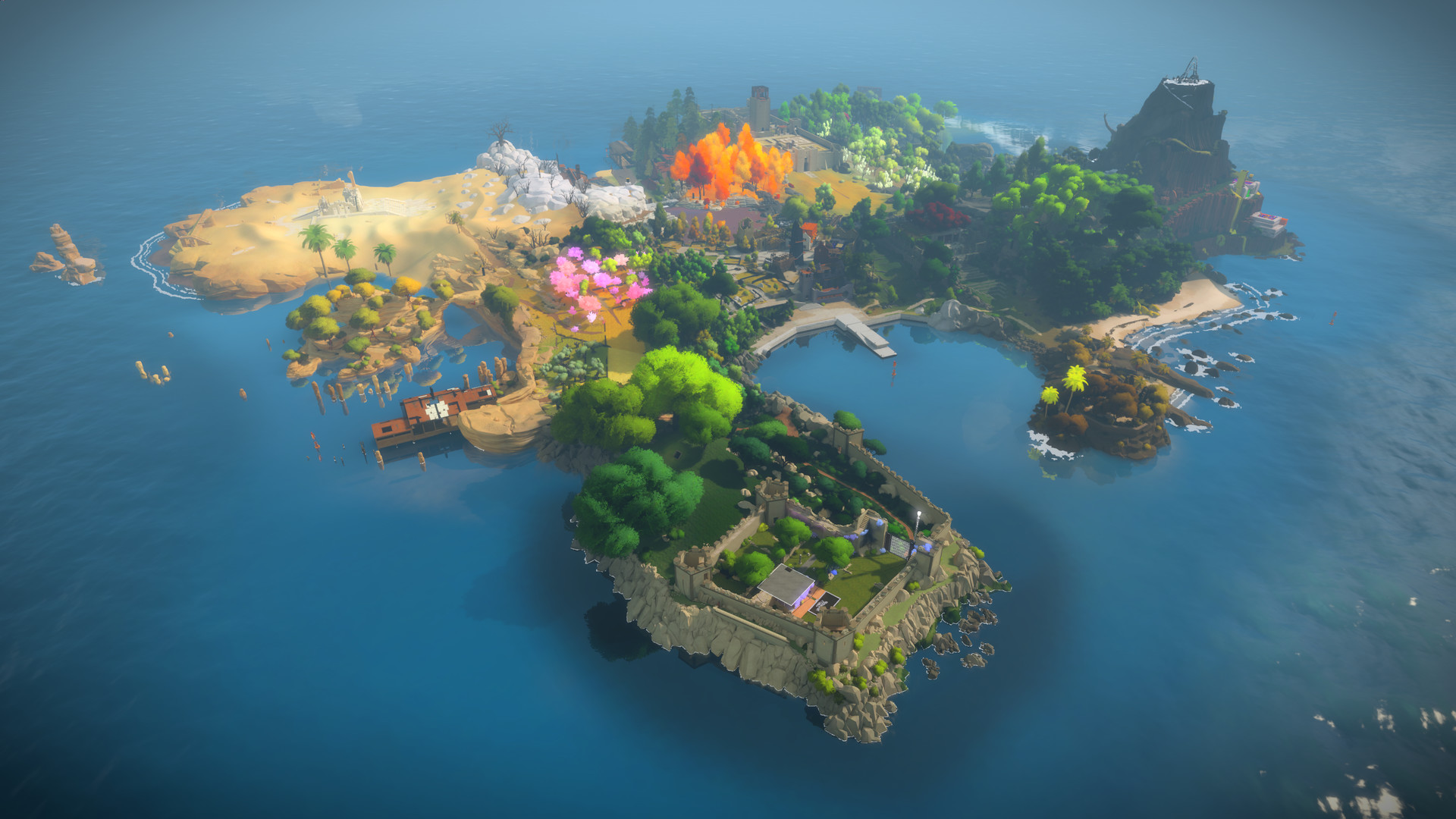
Which is not to say they are bad. In fact they have a key quality that other open world games often lack, which is intricacy and attention to detail in environments.
The thing is, RPG's like Final Fantasy can have the feeling of a big world but they are not called 'open world' games. In puzzle games, content needs to justify its space, since people won't tolerate long stretches of walking as much. In battle royales you at least have this excuse: "it's an endurance test to constantly be on watch for potential enemies". Not in puzzle games, and so that has been a complained-about aspect in Talos Principle 2's incredibly large levels (each 'level' contains about 4-10 puzzles in beautiful looking 'hubs' but it did not need to be so spread out)
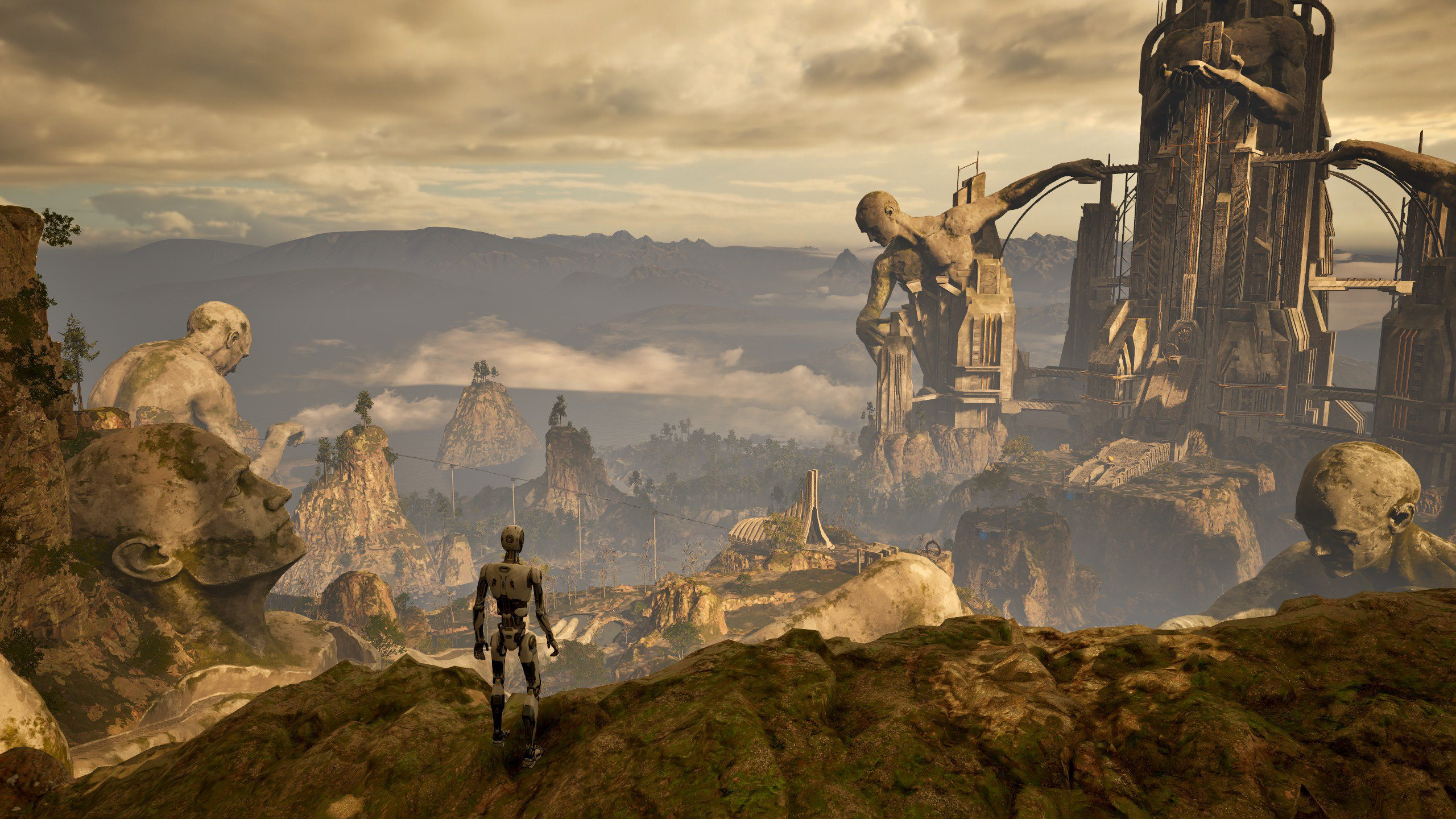
I don't really know if I'm the only one who has noticed that it's kind of funny Taiji, Lingo 1, and Lingo 2 would be considered open world puzzle games despite not sharing the scale of like, a Battlefield or battle royale map. And then The Talos Principle 2 which does have these monumental scales has the same issues as battle royale games with overly long stretches without anything.
Also when I was 13 years old I stretched a water texture horizontally to 1000x1000x1, and 'explored' it and literally very much enjoyed it. This may seem like a ridiculous anecdote now but games like Manifold Garden and recursion and fractals are universally appealing so really I was just an infinite/vastness extremist 
What Does It Mean, "New Content"?
Let us get back to the main idea of the article, whether it's possible to have a quality amount of content such that you'd never lose the feeling of discovery in a world. Such a game might be special and praised.
In my opinion, I felt the postgame of The Witness was intended to be an incentive for you to sit in the world forever. I remember occasionally booting up the game just to appreciate the environment. But you of course had less and less possible puzzles to solve that it no longer felt 'worth your time' even if you had puzzles remaining.
So we come to the question of how to stretch some limited content over an 'oversized' world. It's also worth noting many games already have 'infinite content' in some way, and so maybe the question can be rephrased to be about bridging the gap between games that do truly have 'infinite content' and the lack of it in open worlds.
Game as a Service
Genshin Impact fans are probably thinking about this, and, well, yes probably just having 5 years of backlog content because your game is so profitable is a great way to do that, but RPGs and questlines and monsters detract from the open world experience this article had in mind sorry
That being said other 'open' games like World of Warcraft do have this so I wonder if changes are all that are needed to make an open world feel special. Maybe The Witness could have been added onto for 10 years after release, imagine if we lived in that universe.
Intentional Repetition
Roguelikes are already using repetition and combinatorics to have constant combos and new potential every run, even if you end up memorizing all the game's cards and abilities. Achievements and speedrun-related achievements, and 'officialized' challenge runs are also ways to do this, but it does not make the world feel bigger if you have already experienced it.
That reminds me that Islands of Insight, the open-world game I was involved with working on puzzle design for, and also started life as a battle royale, also had this issue of losing that feeling of intricacy. In that game the environment has quite a tenuous connection to the puzzles in the game compared to other games in the genre that were more handcrafted alongside the environment. The respawning and shifting puzzles in my personal opinion hurt it more than it helped it due to losing a sense of stability, not being sufficient to refresh the idea of 'having already seen the environment'. There were a few excellent secrets but once again it may feel more like The Witness's postgame than a living world.
It's odd because there were so many puzzles in that game, people thought they were majority procedurally generated, when really quite a large amount was handcrafted or handplaced. But it does make you wonder if procgen grid puzzle games could actually deliver on having a lot of content to fill a world, but then again this would have a hard time feeling well-themed, which is what makes it really be meaningful.
3D Mechanics
3D platformers are highly rich in surprise. 3D itself is, honestly, the Talos Principle connectorsIf you haven't played The Talos Principle it's basically just a laser redirector, you select laser sources and can point them to laser receivers or other Connectors in the same line of sight can 'justify' the 3D when many Talos Principle puzzles could be described in 2D. In that lens, leveraging the strongest aspects of 3D starts to feel like a connection between this, Breath of the Wild's "sandboxiness" and Only In Battlefield moments.
My favorite platformer game constantly makes me briefly consider the world as if it were a 3D platformer level and there are always surprises and paths you can imagine under that lens. So it's worth thinking about how that sort of thing could greatly improve a 'flat' 'boring' 3D world. It is why I consider Poke BALL Toads's pathfinding to actually be puzzlelike.
Story and Knowledge Gates
Call of Duty: Warzone has a few pieces of 'lore' and strange things in levels, like scanners and locked doors with chests behind them. This is a strangely exploration-game-like quality for a game you wouldn't quite expect it to have. Of course because it is 'competitive', obtuse, and can unlock time limited skins people just upload easter egg guides, but the spirit is there.
I remember people teased the potential secrets in The Witness for a while before people vaguely sort of concluded there wasn't any big secret left. This made me think of actual stories. Storytelling and theorizing can be a bottomless thing, and it's not even that different from knowledge games. Outer WildsYou may be wondering now that I brought up this game what I thought of it. Well I loved it after experiencing the ending of course but sadly I had one of the saddest personal playthroughs of all time in my first 3-5 hours where I found almost NOTHING important or cool 'no matter where I looked', seemingly, and it felt like it was taking forever to traverse to not find new info. It was such a rough start you would not want to see it. It really picked up for me after discovering the Sunless City though., a very highly reviewed game involving planetary travel, has an unbelievable exploration and 'open world' vibe, but it doesn't even stop at the ending. Because so much of that game is about noticing things, it's fun to watch other people's gameplay to see when they notice particular things in such a different order.
Very Rare Random Events
This is like Stanley Parable's random easter eggs and starting situations or battle royales having a different ending zone each time. This can add replayability and shock value for sure.
Custom Content
Obviously, speaking as a content creator for both Baba Is You and Lingo and other games, with over probably 300 videos combined showcasing custom content, I find immense respect for modding communities for games, probably a lot more than others seem to do (I have heard the sentiment of "I wish there was more to this game" like so many times for games that already have lots of custom content). There is now more content than you could probably ever play, and if you were to shift all that content in your mind as 'official' content they would be some of the most filling games ever.
So why is this idea of an open world exploration game so hard to find then, if I can say that about those games, as if all that's needed is a community to make stuff? I mean I guess a Minecraft server with community builds could be quickly ruined with offensive/divisive stuff, so any 3D attempt would have to deal with that. But still it's so weird that the only real gap between that is that they do not have the 'official' vibes. And no this isn't about getting permission from each person, as you could literally imagine Steam or YouTube as all 'custom content' but that's clearly not what you have in mind when you think of custom content.
Will AI Video Finally Fulfill The Promise Of Infinite Gaming?
No they suck.
This is a quote from a different unpublished article that I feel like dropping here though.
There are world models like Genie 3 now. Somehow they are really boring. Like trying to get hit by a car in Genie 3 is not interesting and instead the car comes to a stop.
These demos showcase being able to spawn an alligator or flood a pool. None of these demos show a good interactive game. It is shocking. Someone pay me $3M to make a good Genie game for real idk. Seriously. And some of the demos are so boring and people can play it in like 30 second trials of you in a boat. Obviously if you want to recreate real life you want to have scenarios with real looking death defying fast rocket stunts while you juggle in the other hand while your anime girlfriend is piggyback riding you, and if you die you keep ascending layers in the afterlife. I don't know what they are doing over at Google HQ. Clowns!
Previously, there was AI trained on minecraft gameplay but with little memory and blurry graphics, so you could stare at a red wall and slowly morph into The Nether, or try and fall into lava and instead fall on honey instead. Getting into 'weird' positions like beating the game was something that the developers paid a bounty for. There was a human competitive aspect to that as well, so I think adding multiplayer could be leveraged.
Some other things!
- Supraland and Supraworld are 'open world' games with metroidvania elements. It got me thinking when I played it, that I had Korok Seed flashbacks. In Breath of the Wild, Korok Seeds became less and less useful and more 'fake'-feeling as a reward for exploration. Supraland and Supraworld gave me this feeling when a 'secret' just gives you coins or a weak upgrade like +1% crit chance, since any 'real' gameplay might have the problem of actually letting you get somewhere new and the game is too actually-linear to allow you to do that. This still seems like a missed opportunity, not having the 'enemy fighting' differ in any way in which getting some great gun upgrades would actually be possible??
- Chess Arena seems to be a game not preferred by the "YouTube algorithm" despite how great it is. Now, there are so many potential factors for this, but for me it makes me think about how you could criticize the game and what it's doing "wrong". Potentially chess+action is too small of an audience but that is speculative.
- However what's relevant to this article is that it's a 2D game trying to take on some of those 'open world' battle royale aesthetics, but it is somewhat lacking in the sandbox elements required for that to happen. Not as much distance, ability combo play, variance between rounds.
- The first version of this article totally forgot to talk about Poke BALL Toads future plans! That's partially because it's still hazy but I've always wanted to make my own open world that's legitimately great to explore. But when making a speedgame with procgen it seems like an impossible task to make it all special, especially the 'intricate' ways that a puzzle game would want to be. I could have a lot more biomes or challenges appear but I'd realistically need to make a lot of content for that. Hopefully combining some of the ideas from this article will do it, I am optimistic!